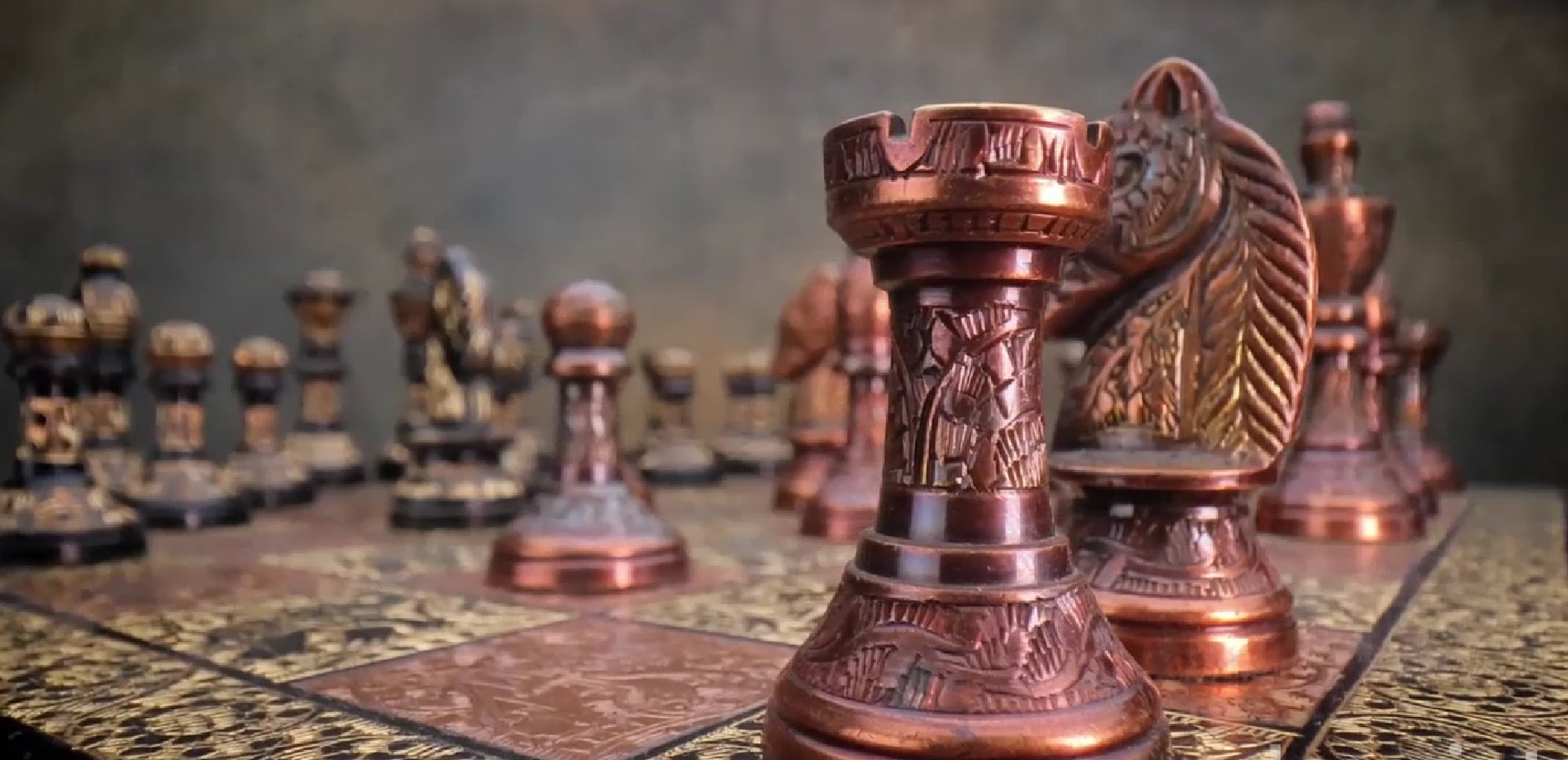
The Knight: Chess's Most Dangerous Oddity
It has the shortest range, the strangest movement, and the most annoying reputation on the board. And yet, after fifteen centuries, the Knight remains one of chess's most feared pieces. Here's why.
CHESS
Swarup Bhattacharya
5/29/20265 min read
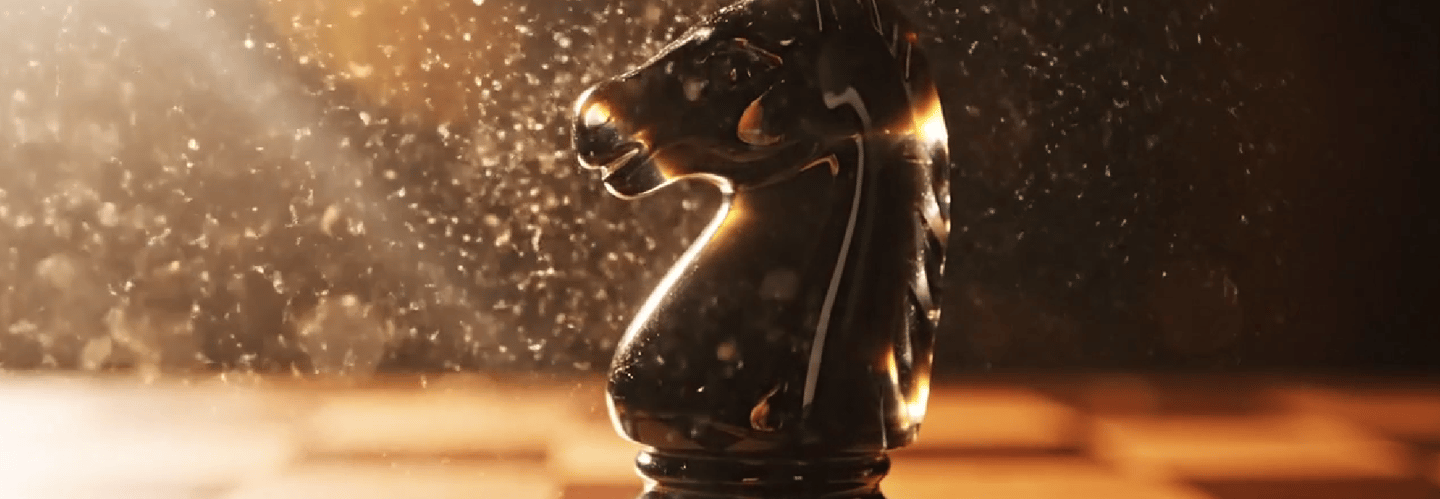
Chess has survived empires, wars, revolutions, and now artificial intelligence. Thirty-two pieces, sixty-four squares, and over fifteen hundred years of human obsession. In all that time, across every culture that adopted the game, one piece has consistently baffled beginners, humbled experts, and refused to behave like anything else on the board. It doesn't move in straight lines. It doesn't move diagonally. It jumps. Meet the Knight — the trickster, the outlier, and the piece that probably just cost you your Queen.
The Oddity on the Board
Look at the chessboard and every other piece seems to follow a kind of natural logic. The Rook charges down files like a battering ram. The Bishop cuts diagonals like a blade. The Queen does all of it simultaneously — ruthless, elegant, unstoppable. And then there's the Knight, squat and stubborn, moving in an L-shape: two squares in one direction, one square perpendicular. It sounds deceptively simple until you're sitting across someone who truly understands it, and your Queen disappears before you even registered the threat.
What makes the Knight truly unique is that it is the only piece on the board capable of jumping over other pieces entirely. It doesn't care about the pawns in its path or the pieces crowding the center. It simply ignores them and arrives — like a magic trick disguised as a chess move. No other piece has this ability. Not one. In a game of elegant geometric logic, the Knight operates by its own rules entirely.
A Piece Born from the Battlefield
The Knight's peculiar movement isn't arbitrary — it has a story. Chess originated in India around the 6th century AD as a game called Chaturanga, meaning "four divisions of the military." Each piece on the board represented a branch of the ancient army: infantry, elephants, chariots, and cavalry. The Knight is cavalry. The horse.
A cavalry charge on a real battlefield doesn't advance in neat straight lines. It sweeps, flanks, and leaps over fallen soldiers. The early designers of this game understood something profound: the horse was the most unpredictable force on the ancient battlefield. So they designed its movement to be equally unpredictable. Fifteen centuries later, that single design decision continues to cause headaches for players at every level of the game
The Fork: The Knight's Deadliest Weapon
There is a tactic in chess called a "fork" — where a single piece attacks two enemy pieces simultaneously, forcing the opponent to lose one of them. Every piece is capable of forking. But no piece forks quite like the Knight.
Because of its L-shaped trajectory, the Knight can attack squares that no other piece can reach from the same position. It sees the board from a different geometry. The most feared combination of all is the Knight fork on King and Queen: the Knight moves, the King is in check and must respond, and while the King scurries to safety, the Knight collects the Queen. One move. Game-changing. It has decided grandmaster games, pivoted World Championship matches, and ended countless club games before the losing player even understood what happened.
The Knight fork is so dangerous precisely because the human brain isn't naturally wired to track it. We see straight lines and diagonals instinctively. The Knight's path cuts across both, arriving from an angle our eyes aren't trained to monitor. By the time most players see the threat, it is already too late.
Knowing When — and When Not — to Use It
What separates a player who uses the Knight from a player who truly understands it is a grasp of its conditions. The Knight is not universally powerful. It has preferences. It has an environment where it thrives — and one where it quietly becomes a liability.
In closed positions, where pawn chains are locked and the board is crowded, the Knight is at its most lethal. It hops over the same pawn structures that strangle Bishops. It infiltrates positions that Rooks cannot reach. The chaos of a congested board is the Knight's natural habitat. But open up the position — clear the pieces, unlock the long diagonals and files — and the Knight's short range becomes a weakness. A Bishop sweeps across the board in a single move. A Rook dominates an open file from a distance. The Knight, by contrast, must hop across the board one awkward step at a time, and by the time it arrives, the moment has often passed.
This is why strong players don't just know how the Knight moves. They know when to deploy it —and equally, when to trade it away for a more appropriate piece.
The Outpost: When the Knight Becomes a Fortress
There is a positional concept in chess called an outpost — a square, typically in the center or in enemy territory, that cannot be attacked by an opponent's pawn. A square of permanent safety.
Place a Knight on an outpost, support it with your own pawns, and you have built something almost architectural. A fortress piece. An occupying force that controls key squares and radiates threat in every direction. Because pawns cannot attack it, removing a well-placed Knight on an outpost requires significant material or positional concessions. The Knight, of all pieces, rewards patience. Manoeuvre it to the right square, and it does the rest.
Some of the most dominant positional performances in chess history have revolved around a single Knight lodged in an outpost that the opponent simply could not dislodge. It is quiet power —the opposite of the Knight's flashy tactical reputation, but every bit as devastating.
Why the Knight Gets Inside Your Head
Ask any chess player — beginner, club regular, or grandmaster — which piece they find the most annoying. The Knight wins that poll without contest. And the reason goes beyond tactics. It is psychological.
When you lose material to a Queen attack, you understand it. The Queen is the strongest piece on the board. When a Rook takes your piece down an open file, you see the logic even as it frustrates you. But when you lose to a Knight, something different happens. It crept from a corner. It jumped over your pieces. It appeared in a square you weren't watching, forked two of your pieces, and left you staring at the board wondering how you missed it entirely.
This is by design — not by the player, but by the geometry of the piece itself. The Knight's movement is non-linear, and the human brain, trained through experience to see threats in straight lines and diagonals, struggles to track it naturally. Developing the ability to visualise the Knight's reach takes specific practice. And that gap between what you see and what is actually there? That is exactly where the Knight lives. And where it wins.
The Trickster Piece: Chaos Inside Structure
Chess is defined by logic — by deep calculation, by long forcing sequences, by engines that evaluate positions to depths no human can reach. In that world, the Knight is something else entirely. It is a symbol of creativity within a rigid system. Chaos inside structure. The illogical move that turns out to be the most logical of all.
Every other piece operates on a clean, understandable geometry. They move the way structured thinking moves: in straight lines, in predictable arcs, in patterns the mind can learn to master with enough practice. The Knight zagged when every other piece zigged. That strange, seemingly unruly L-shape became, over fifteen centuries, one of the most powerful and feared tools in the entire game.
It is the outlier. The piece that shouldn't work the way it does — and yet works brilliantly. And perhaps that's the quiet lesson the Knight offers, sitting there on its square with its horse's head and its impossible geometry: power doesn't always announce itself loudly. The most dangerous forces are not always the ones moving in straight lines. Sometimes, the thing you didn't see coming is the thing you should have feared the most.
Limited range. Strange movement. Socially unacceptable geometry. And still, after fifteen centuries, one of the most dangerous pieces on the board. Funny how that works